Vertical Scrubber
Single Phase
Finite Computational Fluid Dynamics (CFD) for the Oil & Gas Industry
Challenge.
A vertical HP scrubber upstream of a compressor was suffering excessive liquid carryover, despite a retrofit in 1998 and a subsequent internal modification in 1999. Multiple radioactive isotope scans continued to indicate high carryover. The vessel incorporated a non‑standard, non‑submerged cyclonic inlet device feeding axial‑flow mist‑elimination cyclones, with no published performance data.
Approach.
Two complementary CFD studies were undertaken - one on the existing design and one on a proposed solution. In both, we investigated cyclone loading, gas distribution uniformity, and re‑entrainment risk from the liquid level.
We built a full 3D model of the vessel, including the twin vortex‑finder inlet cyclone geometry, the axial cyclones, and the 1999 gas‑deflector plate. Turbulence was modelled using RSM with standard wall functions, appropriate for swirling cyclone flows
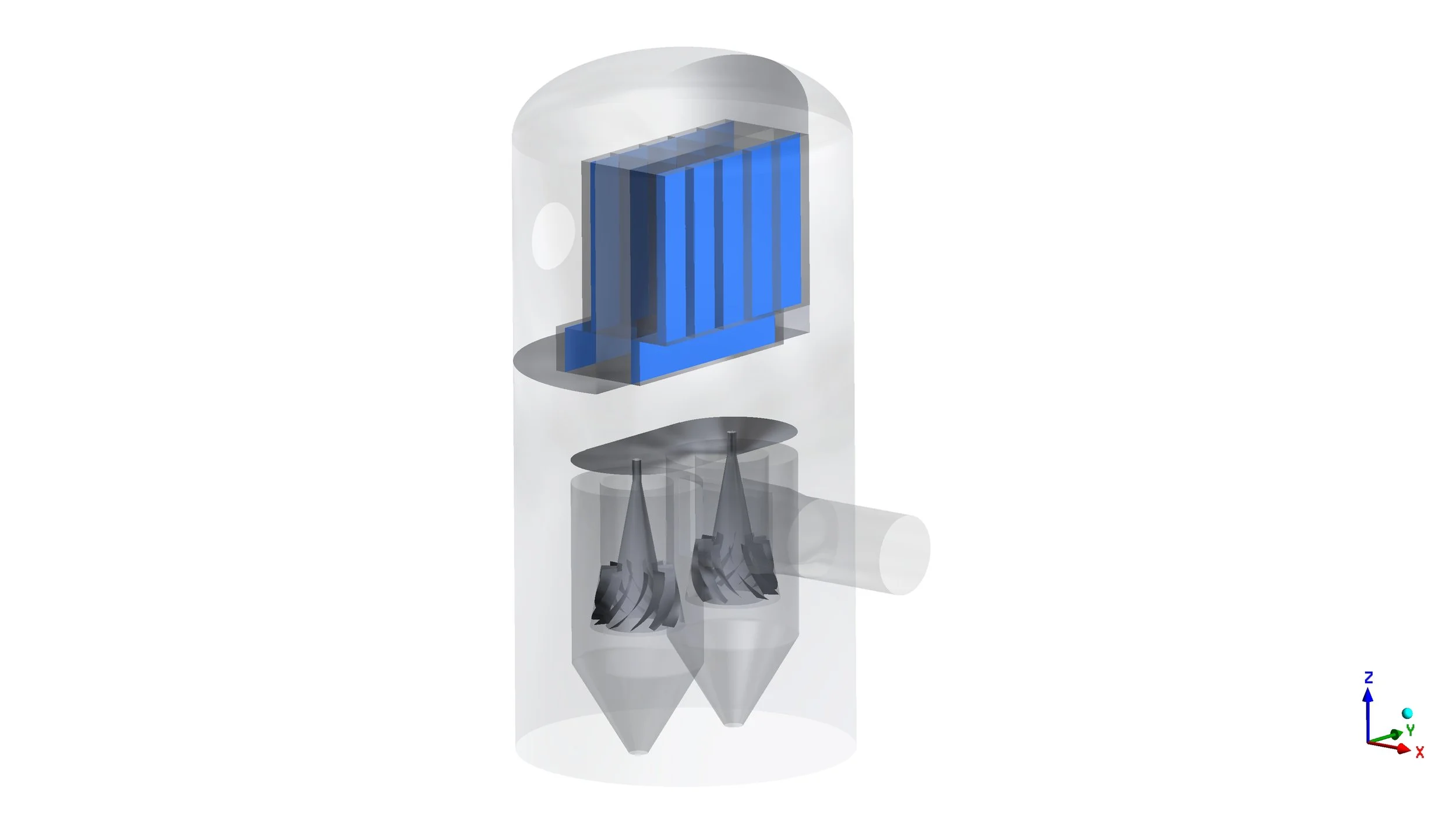
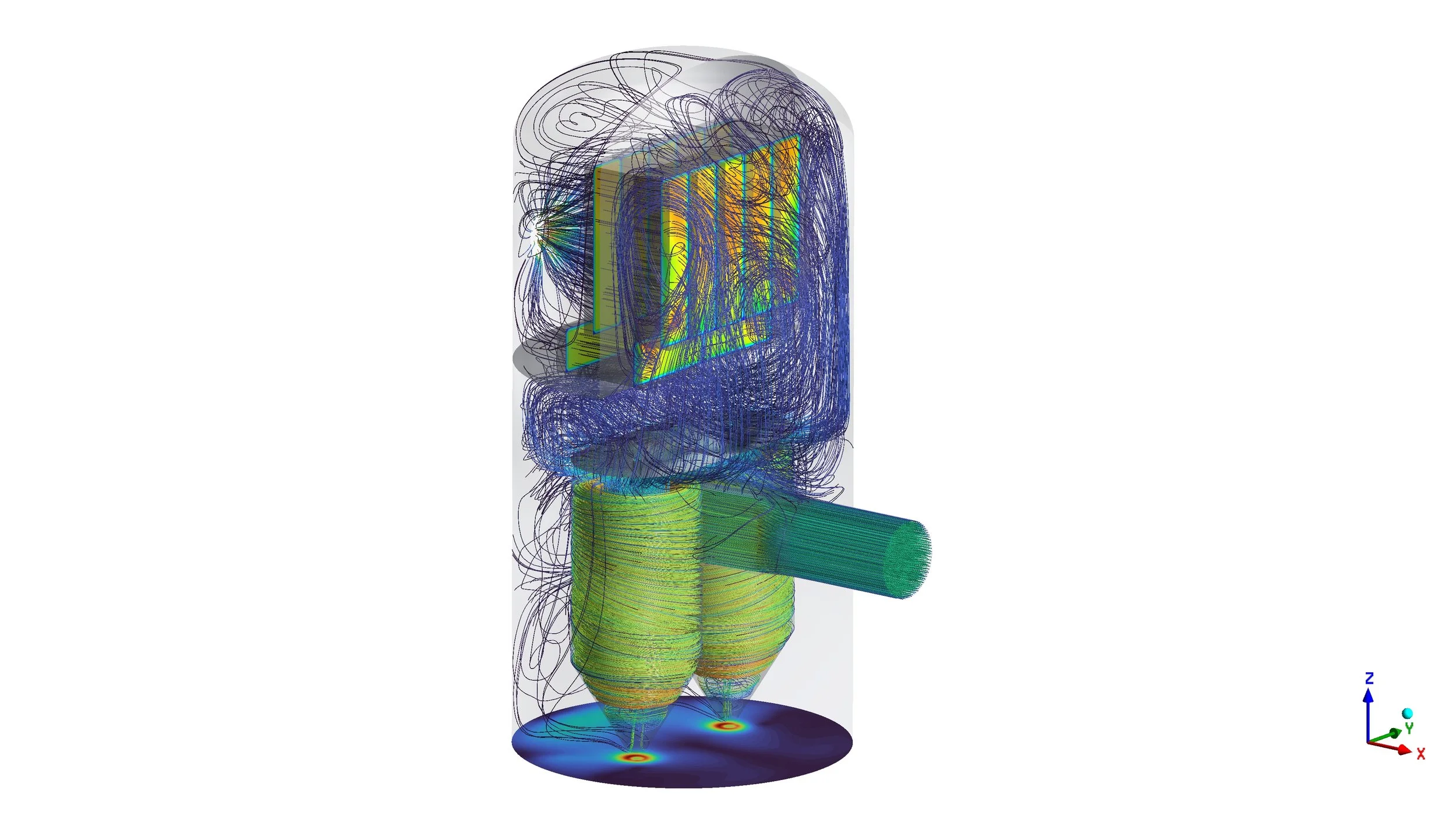
Origional Design
The results showed reverse flow at the bottom of the inlet cyclone, preventing separated liquid from draining. This led to liquid accumulation and overloading of the axial cyclones - a mechanism consistent with the observed carryover. Gas maldistribution across the cyclone bank further degraded performance.
We modelled a redesigned internal arrangement comprising a vane‑type inlet device, mesh agglomerator, and vertically mounted axial flow cyclones, and we included a section of upstream piping to capture inlet‑swirl effects.
Re‑entrainment risk from the liquid level was assessed using the Kelvin–Helmholtz re‑entrainment criterion. The risk was assessed as high, leading to inclusion of an anti‑re‑entrainment plate in the solution that was finally installed to significantly reduce near‑level gas velocities and liquid pick‑up.
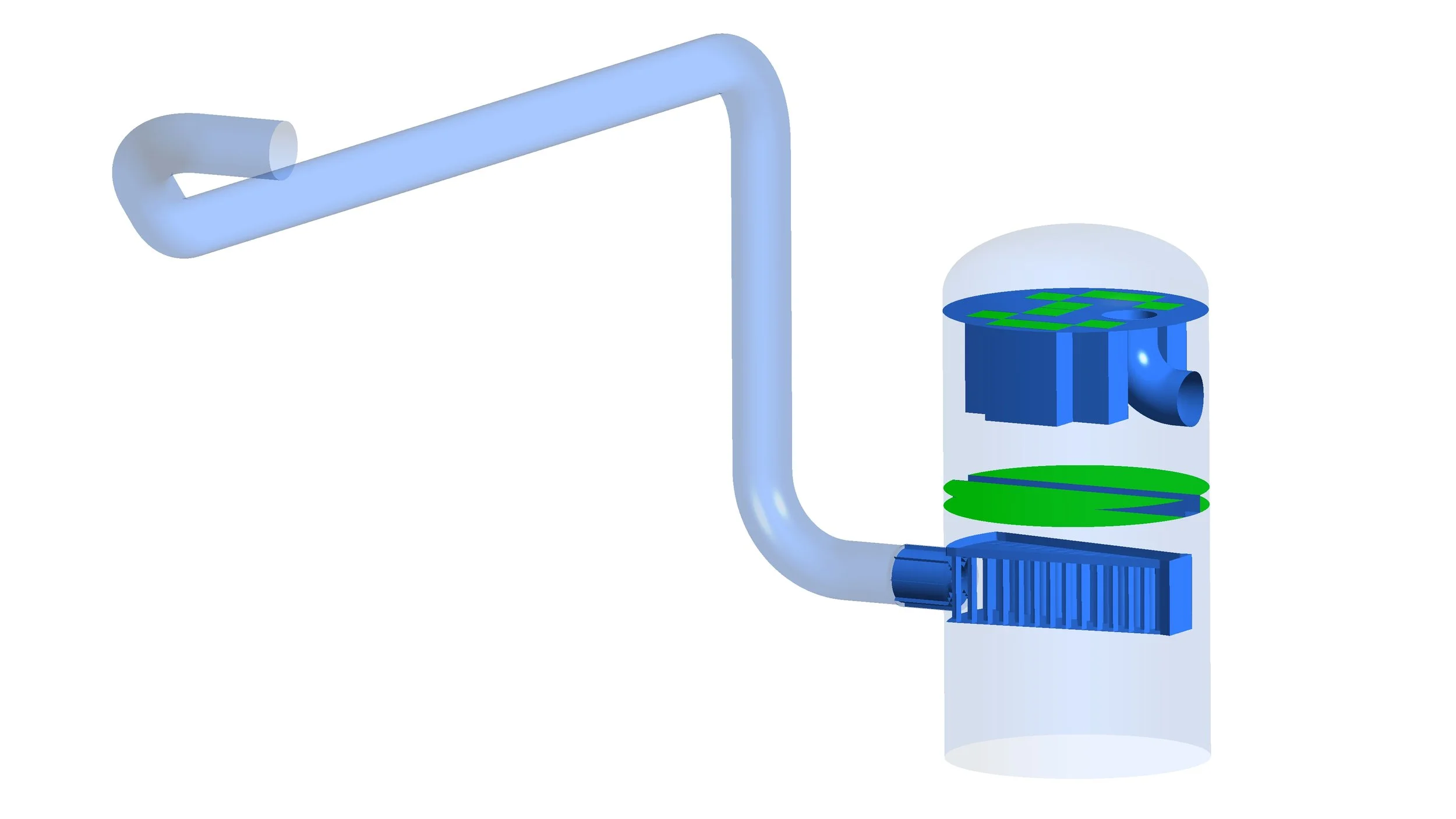
The proposed solution
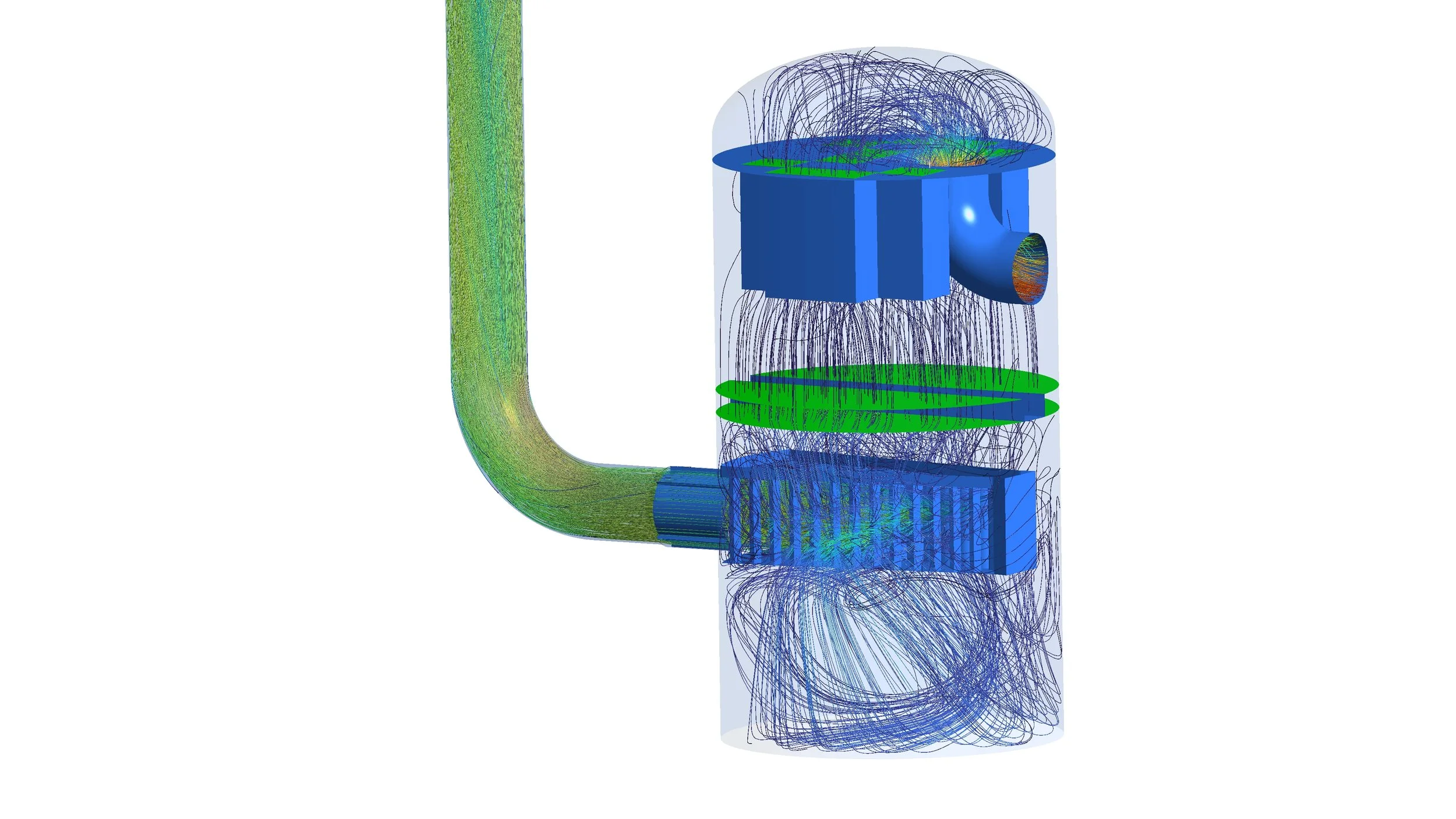
Testing the proposed solution
Validation and Delivery.
The study identified a clear route to excessive carryover for the existing design - matching field observations. Post‑installation, carryover with the proposed solution was substantially reduced and within the required limit. Together, these observations validate the CFD model and analysis methodologies that Swift TG Solutions routinely applies to similar studies.
Deliverables included a comprehensive technical report (inputs, assumptions, results, and recommendations) and a stakeholder presentation to support review and decision‑making.
Result.
The proposed solution delivered much improved separation and substantially lower carryover, protecting the downstream compressor and restoring confidence in the scrubber’s performance.
“Swift TG Solutions quickly identified performance limitations and provided changes we could implement without redesigning the whole vessel”
Vertical Scrubber Single Phase
Download PDF